
Pain call received
After hours, weekends, or when front desk is unavailable.
Emergency Triage·Pain Call Triage
Dental pain doesn't wait for Monday. Patients call at night expecting someone to help — or they go to the ED, or book with the practice that answered. We triage after-hours pain calls and route to your on-call protocol.
The problem
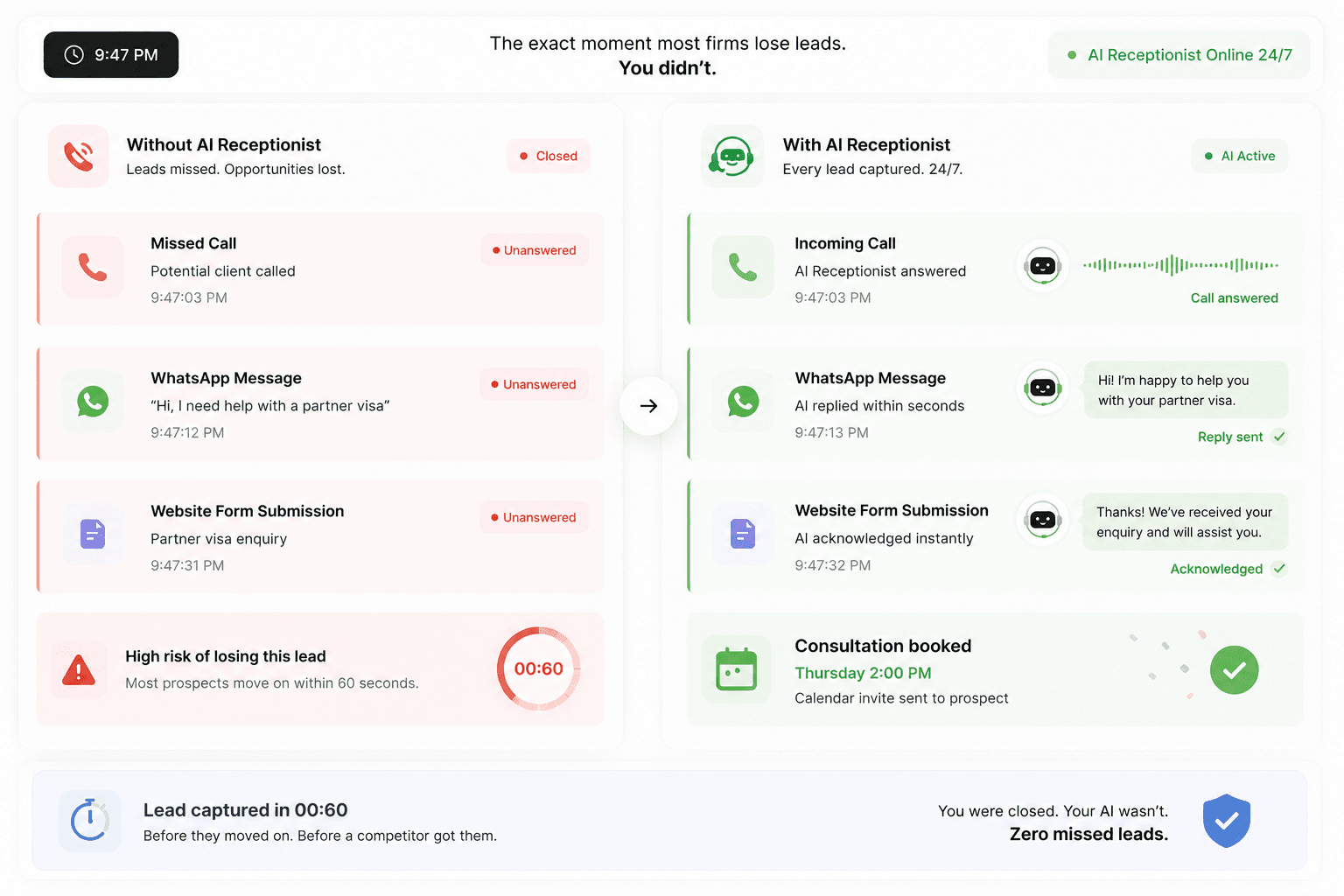
Toothache at 9pm is distressing. Patients call expecting guidance — even if it's just 'we can see you first thing tomorrow'. Voicemail sends them elsewhere.
Dental practices can't provide clinical advice via automation — but they can triage urgency, capture symptoms, and route to the right next step. That's the gap.
Emergency dental appointments are high-value and loyalty-building. Missing the after-hours call loses the patient permanently.
What this looks like today
After-hours pain calls go to generic voicemail
No structured triage — swelling and mild sensitivity treated the same
On-call dentist woken for calls that could wait until morning
Patients with true emergencies can't reach anyone
No symptom capture before the appointment
AHPRA risk if untrained staff give clinical advice on the phone
What we build
Every component designed for australian private dental practices — wired together, not sold separately.
Every evening and weekend pain call answered — no voicemail, no silence.
Symptom questions assess swelling, bleeding, trauma, and pain level — without diagnosis.
No clinical advice given. Urgent cases routed to on-call protocol. ED referral language for true emergencies.
High-urgency cases trigger SMS to on-call with symptom summary and patient contact.
Non-urgent pain calls booked for first available emergency slot — often next morning.
Dentist receives structured symptom summary before the appointment — not 'patient has toothache'.
How it works
Step by step — most implementations go live in two to three weeks.
After hours, weekends, or when front desk is unavailable.
Structured questions on pain level, swelling, trauma, duration — no diagnosis.
Triage score applied against your practice's emergency criteria.
On-call escalation, next-available booking, or ED referral guidance.
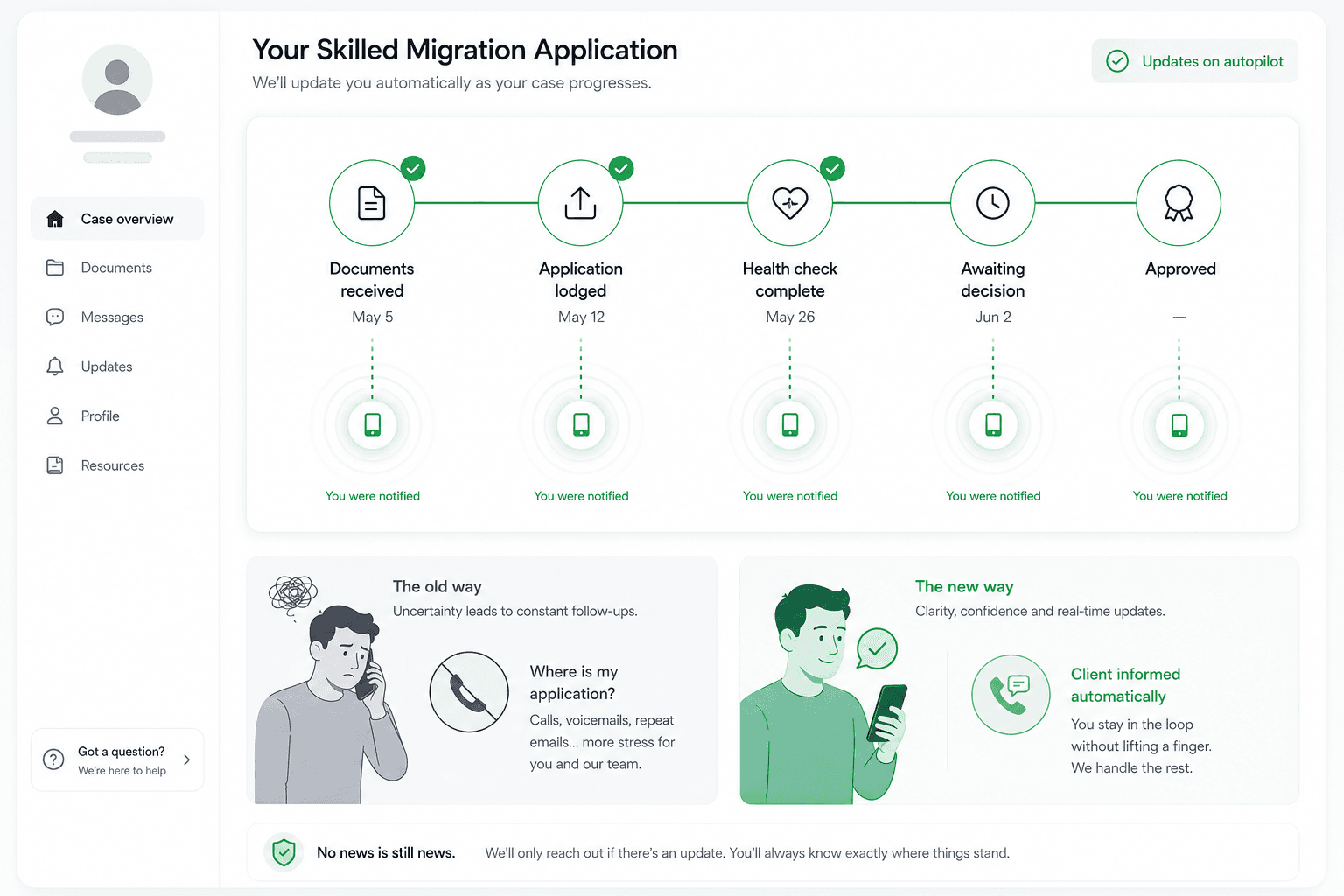
Clear next steps communicated — appointment time, what to bring, what to expect.
Symptom summary in PMS before the patient arrives.
Outcomes
After-hours emergencies captured
Pain calls answered and routed — not lost to voicemail.
AHPRA-safe triage
Structured escalation without clinical advice via automation.
On-call protected from noise
Only genuine urgencies wake the on-call dentist.
Better appointment prep
Symptom details captured before the patient sits in the chair.
Patient loyalty from crisis
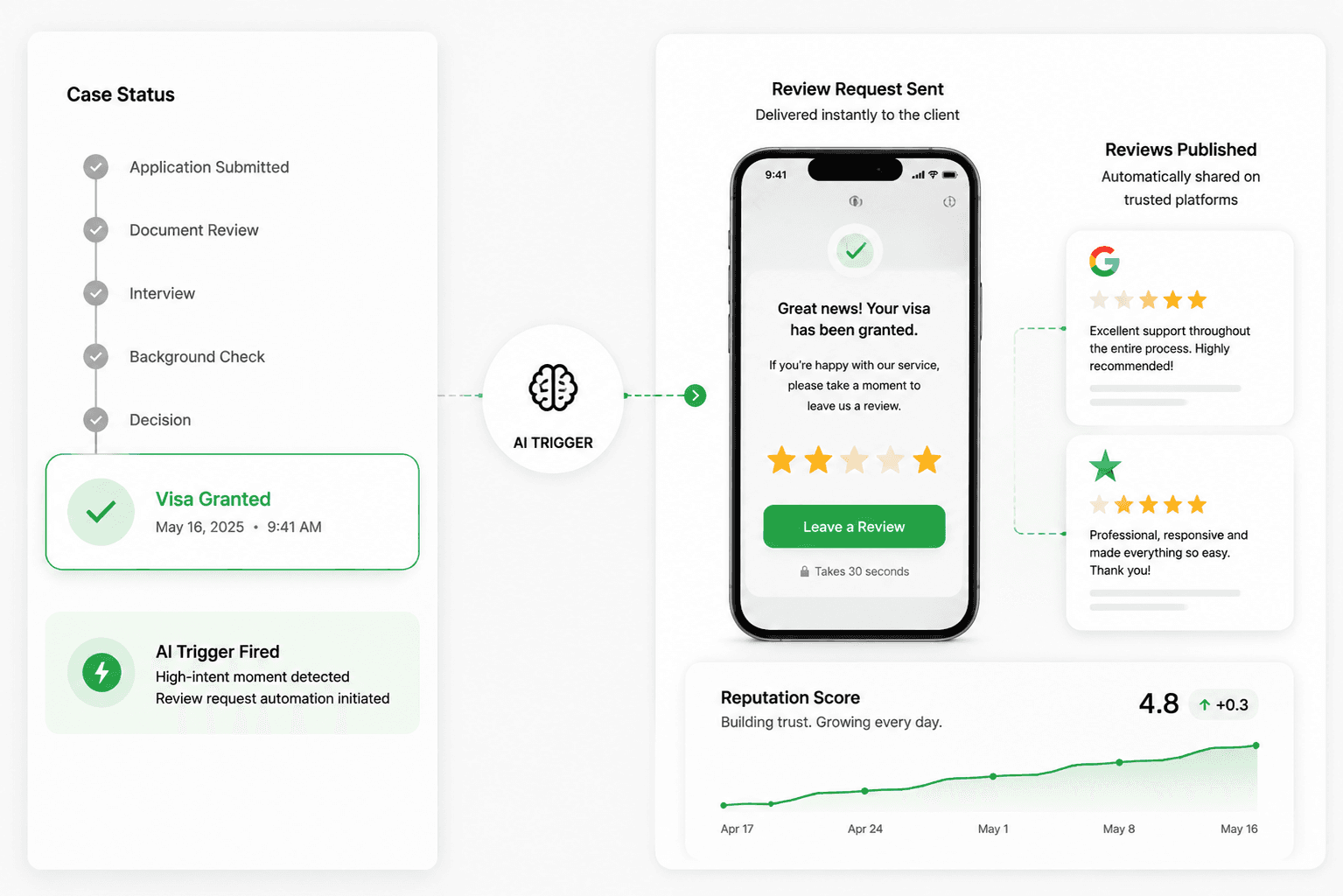
Being there during toothache builds long-term trust.
Emergency slot utilisation
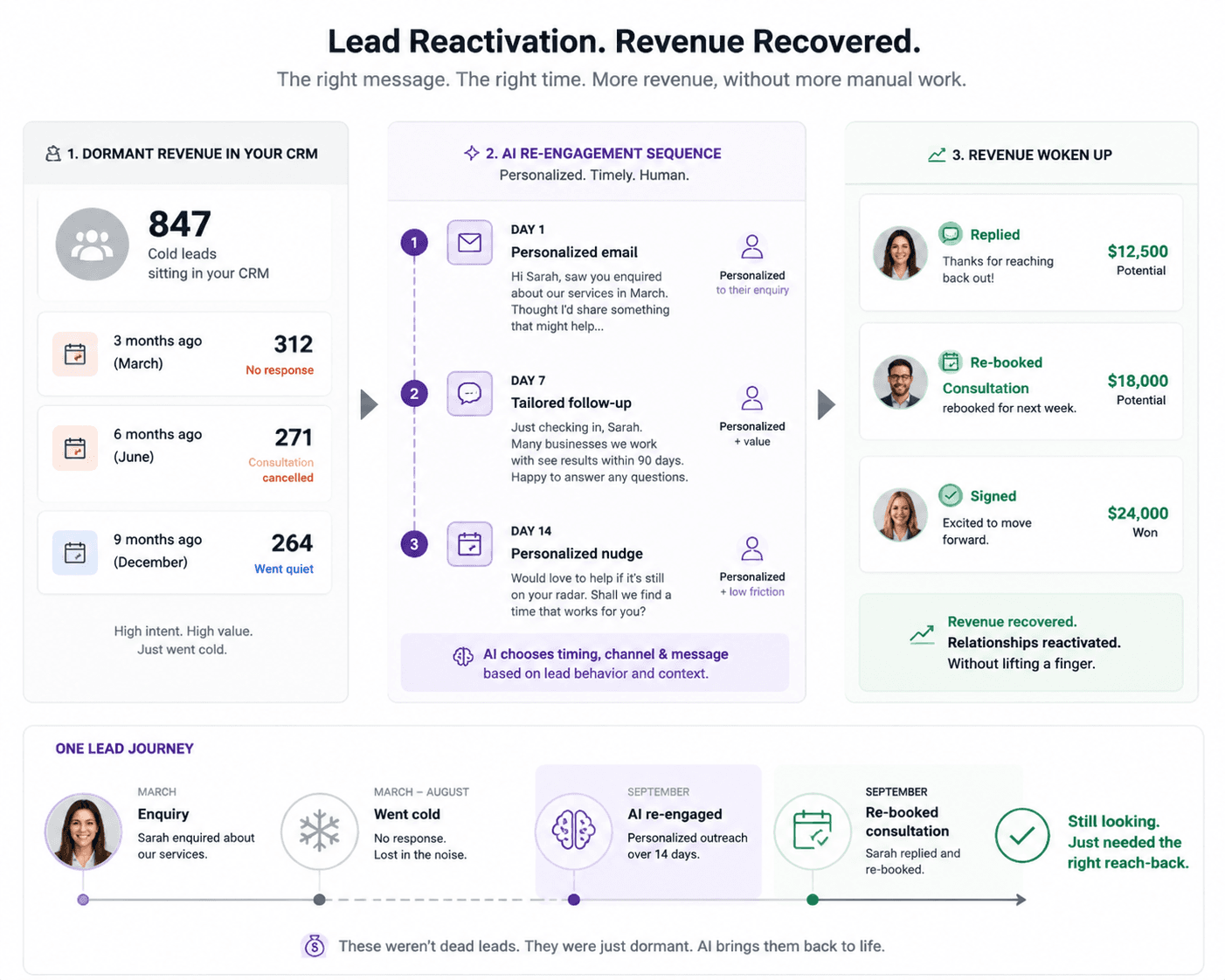
Next-available bookings fill emergency blocks automatically.
Timeline
Phase 01
Week 1
Discovery: emergency criteria workshop, on-call protocol, AHPRA compliance review, and triage rules.
Phase 02
Week 2
Build: triage scripts, escalation workflow, on-call notifications, and booking integration.
Phase 03
Week 3
Go live. Monitor urgency split, on-call volume, and patient outcomes.
Common Questions
Never. The system captures symptoms and assesses urgency against your criteria only. All clinical decisions remain with your team.
Triage flags facial swelling, breathing difficulty, and trauma patterns for ED referral language — with clear 'call 000' guidance where appropriate.
Yes. Your practice defines urgency thresholds — swelling, bleeding, post-surgical complications, etc.
On-call roster configured weekly. Escalation routes to whoever is on call with backup if no response.
Designed for triage and routing only — no clinical advice, no treatment recommendations. Escalation to registered practitioners for all clinical decisions.
Yes. Mild sensitivity and non-urgent discomfort booked for next available — patient captured, not lost.
Next step
Book a strategy call and we'll walk through how this system fits australian private dental practices specifically.